Greenland Is Not for Sale: Trump's Renewed Demand Has Sparked a Diplomatic Clash
At the NATO Summit in Türkiye, Denmark firmly rejected US President Donald Trump's renewed call for American control over Greenland, asserting that the Arctic island's future rests solely with its people. The dispute has once again highlighted growing geopolitical competition in the Arctic, raising questions about sovereignty, security, NATO unity, and the strategic importance of Greenland. By Mahima Katal New Delhi, July 8: The geopolitical battle over Greenland returned to the global...
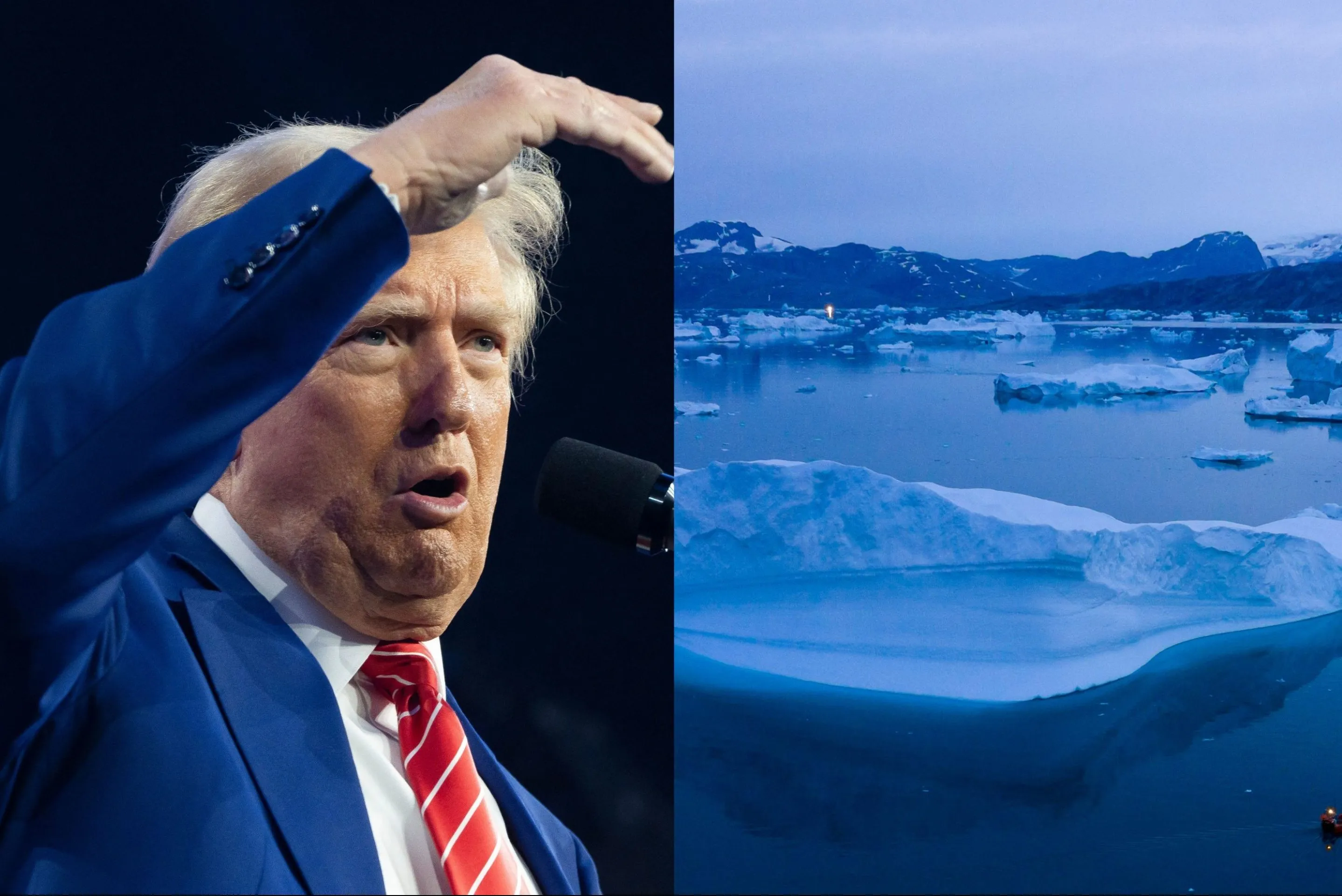
At the NATO Summit in Türkiye, Denmark firmly rejected US President Donald Trump's renewed call for American control over Greenland, asserting that the Arctic island's future rests solely with its people. The dispute has once again highlighted growing geopolitical competition in the Arctic, raising questions about sovereignty, security, NATO unity, and the strategic importance of Greenland. By Mahima Katal New Delhi, July 8: The geopolitical battle over Greenland returned to the global spotlight on Wednesday after US President Donald Trump reiterated that the United States should control the Arctic island, prompting an immediate and unequivocal response from Denmark.
Speaking ahead of the NATO leaders' summit in Türkiye, Danish Prime Minister Mette Frederiksen declared that "Greenland is of course not for sale," stressing that its future must be determined solely by the people of Greenland.
Her remarks underscored Denmark's position that sovereignty and territorial integrity remain non-negotiable among NATO allies.
Denmark Reaffirms Greenland's Right to Self-Determination
Frederiksen said Denmark expects all countries—including allies—to respect Greenland's democratic right to decide its own future.
"We hope that all, including all allies, will respect the Greenland people's right for self-determination," she said.
She further emphasised that Denmark is fully prepared to defend Greenland as part of NATO's collective security framework.
"We are ready to defend every inch of NATO, including our own territory," Frederiksen said, reaffirming Copenhagen's confidence in the alliance's mutual defence commitments.
The statement was widely interpreted as a response to Trump's renewed territorial ambitions.
Trump's Greenland Proposal Returns
Trump revived an issue that first drew international attention during his earlier presidency when he expressed interest in purchasing Greenland from Denmark.
His latest remarks suggest that Washington continues to view Greenland as strategically indispensable due to its location in the Arctic, abundant mineral resources, and growing importance amid melting polar ice.
Although the US already maintains the Pituffik Space Base (formerly Thule Air Base) in Greenland under a long-standing defence agreement, Trump's comments go significantly further by advocating direct American control.
The proposal has once again generated diplomatic discomfort within NATO, where member states are expected to safeguard—not challenge—each other's territorial sovereignty.
Why Greenland Matters
Greenland has emerged as one of the world's most strategically significant territories.
The island sits between North America and Europe, making it vital for Arctic surveillance, missile defence, military logistics and emerging shipping routes.
Climate change has also transformed Greenland into a focal point of global competition. Retreating ice is opening access to rare earth minerals, critical metals and new maritime corridors, attracting growing interest from major powers including the United States, Russia and China.
For Washington, Greenland represents a crucial component of Arctic security. For Denmark, however, it is an autonomous territory whose future can only be determined through democratic self-governance.
Iceland Calls for NATO Unity
Icelandic Prime Minister Kristrún Frostadóttir also rejected any suggestion of external control over Greenland, stating that the island belongs to its people.
She urged NATO members to remain united against common security threats rather than create divisions within the alliance.
According to Frostadóttir, Russia continues to pose the most significant security challenge facing NATO, making alliance cohesion more important than territorial disputes among partners.
A Test for NATO's Unity
Trump's renewed demand comes at a sensitive moment for NATO as the alliance seeks greater unity in response to evolving security challenges in Europe and the Arctic.
The disagreement also exposes a broader tension between strategic competition in the Arctic and the principles upon which NATO was founded—collective defence, respect for sovereignty, and territorial integrity.
While there is no indication that Denmark's position has shifted, Trump's remarks have once again drawn international attention to Greenland's growing geopolitical value and the increasing importance of the Arctic in global power politics.
As competition over the polar region intensifies, Greenland is likely to remain at the centre of strategic calculations. Copenhagen, however, has made its position unmistakably clear: Greenland's future is for Greenlanders—not foreign powers—to decide.