Jains Protest Maneka Gandhi's Remarks on Peacock Feather Picchis - Know What Happened
Maneka Gandhi's remarks on peacock feather picchis spark protests from Jains as animal rights groups back her wildlife concerns.
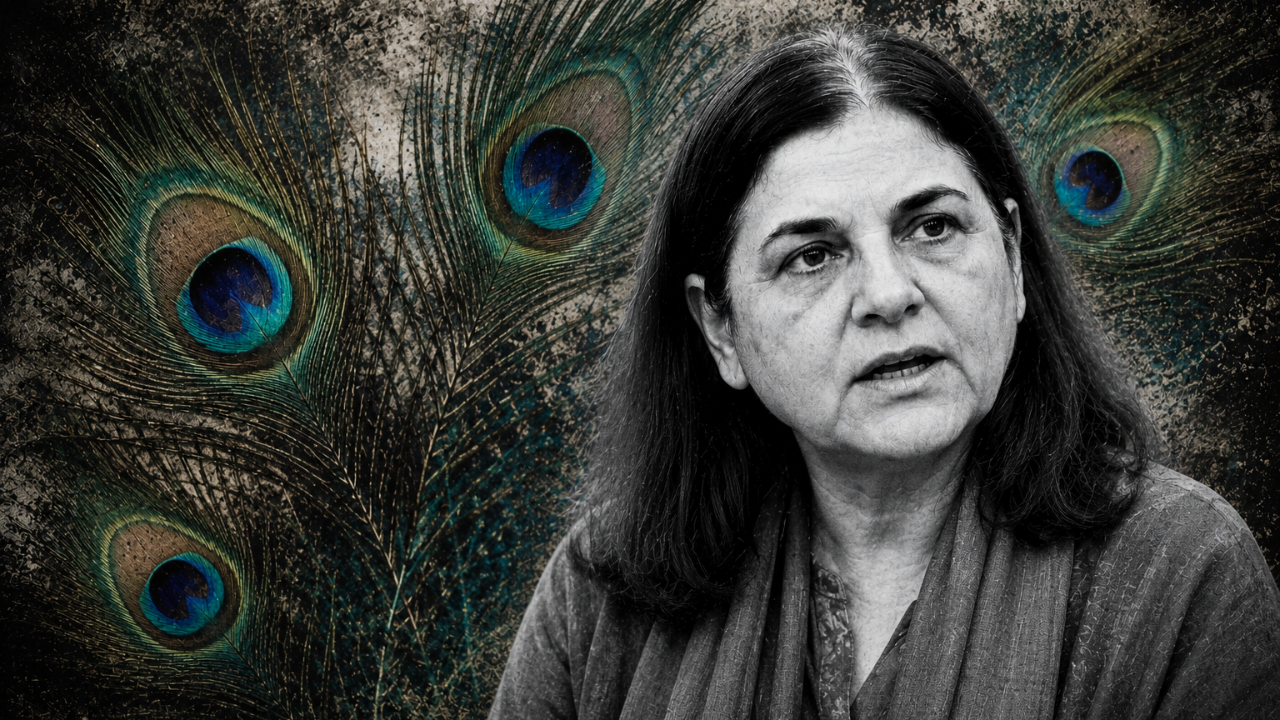
Maneka Gandhi's appeal to stop using peacock feather picchis has triggered protests from Jains and support from animal rights groups.
By Pranjal Gupta
New Delhi, July 5: A controversy has broken out after former Union minister Maneka Gandhi urged the Jain community to stop using picchis, the sacred brooms made from peacock feathers. She claimed that the demand for these feathers has encouraged illegal wildlife trade and led to the killing of lakhs of peacocks.
Her remarks have drawn strong criticism from members of the Jain community, who called the allegations "completely wrong". They said Jainism is based on the principle of Ahimsa, or non-violence, and does not support the killing of any living being. At the same time, several animal rights activists have backed Gandhi, saying the illegal trade in peacock feathers remains a serious concern.
Maneka Gandhi's appeal against peacock feather picchis sparks debate between Jain organisations and animal rights groups over wildlife protection. (AI-Generated Image)
What Is a Picchi?
A picchi is a sacred handheld broom used by Jain monks, especially those belonging to the Digambara sect. Monks gently sweep the ground with it before sitting or walking to avoid harming insects and other small creatures.
Traditionally, the broom is made from peacock feathers.
Maneka Gandhi's Claims
Speaking last week, Gandhi appealed to Jain monks to stop using peacock-feather picchis and instead switch to alternatives made from rope or other non-animal materials.
She said she was not accusing the Jain community of killing peacocks. However, she argued that the demand for peacock feathers had created a market that encouraged illegal wildlife trade.
"I am not saying that the Jain community killed the peacocks. But they opened the door. And once the door opens, 15 to 25 lakh peacocks have died," Gandhi said.
She also claimed that peacock feathers do not fall naturally in the numbers needed to meet market demand.
"This feather does not drop on its own. In a month, one feather falls," she said.
According to Gandhi, once the commercial market for peacock feathers developed, smugglers, traders and designers entered the business. She also claimed that feathers sold openly in markets, including shops in Delhi's Janpath, come from birds that have been killed.
Jain Community Rejects Allegations
Leaders of the Jain community strongly rejected Gandhi's claims.
Sanjay Jain, National President of the Vishwa Jain Sangathan, said it was wrong to blame only the Jain community because peacock feathers are also used in traditional folk dances and cultural practices across India.
He said the organisation has written to Prime Minister Narendra Modi and that community members have filed police complaints against Gandhi in several parts of the country.
"To say that peacocks are being killed because of the Jain community is completely wrong," he said.
He added that Jainism is built on Ahimsa and that no Jain monk or follower would support killing peacocks for religious purposes.
Members of the Digambar Jain community also staged a protest in Shivamogga, Karnataka, on Friday against Gandhi's remarks.
Animal Rights Groups Support Gandhi
Several animal welfare organisations supported Gandhi's appeal.
PETA India said the safest way to protect peacocks is to stop using their feathers completely.
The organisation said that as long as people continue to buy peacock feathers, illegal traders will find ways to supply them.
It also rejected the argument that naturally shed feathers are enough to meet commercial demand.
According to PETA India, the large number of peacock feather products available in markets suggests that illegal trade continues despite legal restrictions.
The organisation urged people to use non-animal alternatives instead.
Illegal Trade a Serious Concern
Asher Jesudoss, a member of the Delhi Animal Welfare Board's Executive Committee, said animal welfare groups have raised this issue for many years.
He said there appears to be an organised illegal trade in peacock feathers. In his view, the large number of feathers available in the market cannot be explained by naturally shed feathers alone.
Jesudoss also described how poachers allegedly trap peacocks using spring snares made from scooter clutch wires. When a bird steps into the trap, the wire tightens around its leg, causing serious injuries.
He said wildlife protection laws in India are strong enough, but enforcement remains weak because forest officials often lack manpower while wildlife trafficking networks have significant financial resources.
Call for Change
Jesudoss said every religion should examine whether some traditional practices continue to cause unnecessary suffering to animals.
He added that Jainism, which strongly promotes non-violence, should be open to considering humane alternatives if cruelty exists in the supply chain.
Rashim Sharma, co-founder of the Humans Caring for Environment and Animals Foundation, echoed that view.
She said the Jain community has long been known for compassion and respect for all living beings.
"If cruelty exists in the supply chain, humane alternatives should be embraced," she said.
Sharma added that adopting non-animal alternatives would be a small but meaningful step towards protecting India's national bird.