La Guaira: Venezuela's 'Disaster Zone' That Cut Off from the World in 60 Seconds
In just thirty seconds of chaos, twin earthquakes registering 7.2 and 7.5 magnitude turned Venezuela's coastal state of La Guaira into a declared "disaster zone" — dozens of buildings collapsed, its international airport shuttered, and communication lines severed, leaving the region virtually cut off from the rest of the world.
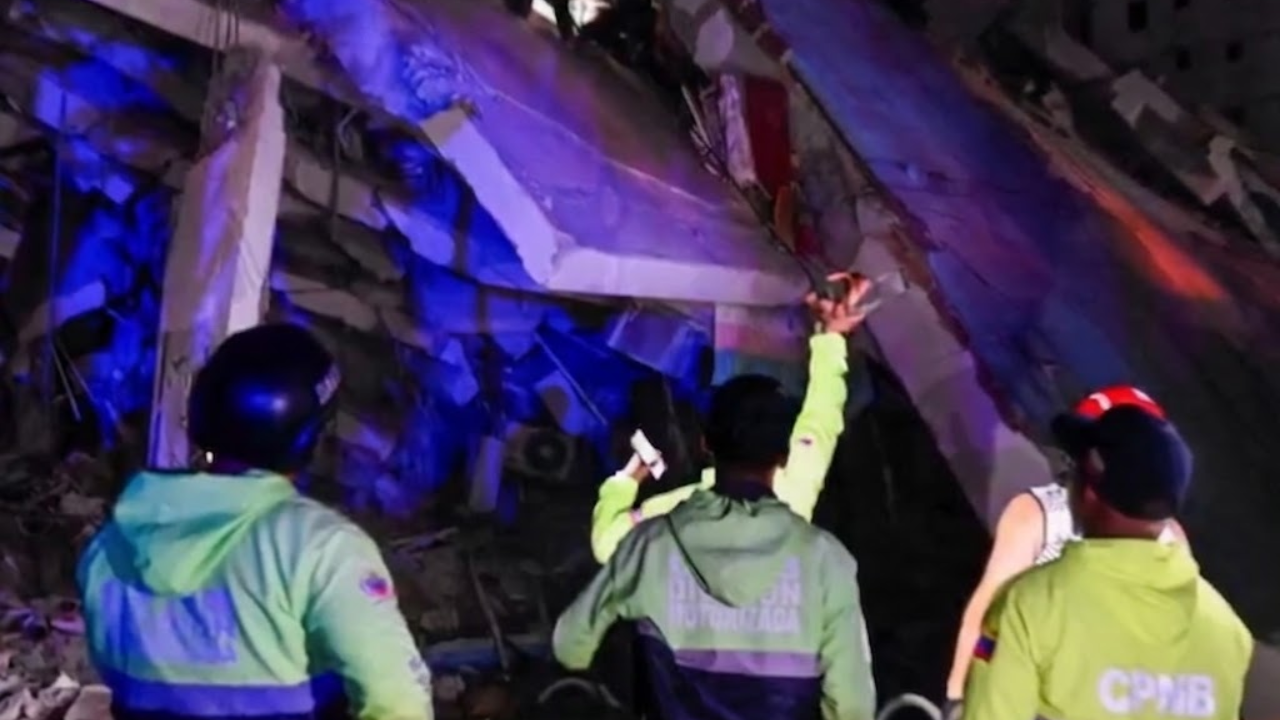
Twin earthquakes registering 7.2 and 7.5 magnitude struck Venezuela just sixty seconds apart, killing at least 164 people, injuring nearly 1,000 others, and leaving the coastal state of La Guaira declared a "disaster zone" — collapsed buildings, a shuttered international airport, and broken communication networks cutting it off from the rest of the world.
By Pranjal Gupta
A pair of historic, back-to-back earthquakes rocked Venezuela on Wednesday evening, killing at least 164 people, injuring nearly 1,000 others, and leaving the coastal state of La Guaira completely devastated and largely cut off from the world.
The twin quakes, registering magnitudes of 7.2 and 7.5, struck just one minute apart shortly after 6:00 PM. They represent the most powerful seismic event to strike the country in more than a century. The shockwaves were so massive that they roiled the region, forcing building evacuations as far away as Manaus, Belém, and Macapá in the Brazilian Amazon, some 1,700 kilometers (1,050 miles) from the capital.
On Thursday, Acting President Delcy Rodríguez announced that the death toll had surged to at least 164, with 971 people injured. Officials warn the casualties will continue to climb sharply as emergency crews finally penetrate the hardest-hit zones.
Emergency workers pull survivors from rubble in La Guaira, Venezuela, after back-to-back earthquakes measuring 7.2 and 7.5 in magnitude killed at least 164 people and devastated the coastal state in a catastrophic 60-second seismic event. (Source:
UN Human Rights Council Investigative Bodies)
La Guaira Declared a "Disaster Zone"
The current casualty figures exclude the coastal state of La Guaira, located about 30 kilometers north of Caracas, which bore the brunt of the destruction. Rodríguez declared a national state of emergency, explicitly designating La Guaira a "disaster zone."
"Dozens of buildings have collapsed there," Rodríguez said during an address to the nation.
"We are currently carrying out intensive rescue operations to save lives."
In a rare glimmer of hope amidst the wreckage, state-run television station VTV broadcast footage early Thursday showing three children, covered in thick gray dust but alive, being pulled from the rubble by emergency workers in La Guaira.
However, rescue logistics are severely compromised. The earthquakes caused significant structural damage to Simón Bolívar International Airport—the country's primary aviation hub located in La Guaira—forcing its immediate closure.
Sixty Seconds of Terror
The U.S. Geological Survey (USGS) reported that the first 7.2-magnitude quake struck at a depth of 22 kilometers, centered just west of Morón on the Caribbean coast. Merely sixty seconds later, a second, shallower 7.5-magnitude quake tore through the same region at a depth of 10 kilometers.
In Caracas, residents fled swaying high-rises in absolute panic. Outer walls of apartment buildings sheared off entirely, leaving furniture exposed to the open air.
"It started off gently and then gradually grew, and in the end, we all had to leave our houses, go outside and gather together," said Caracas resident Hector Ricci. Another resident, Roberto Gama, described his building shaking violently from side to side. "Unreal," he said.
"The force was incredibly strong."
The crisis has been exacerbated by widespread cellular network failures across the country. The lack of communication has caused deep distress for families within Venezuela, as well as the more than 7.7 million Venezuelan migrants and refugees living abroad who are desperately trying to contact loved ones. From exile, opposition leader María Corina Machado sent a message on X, wishing the country "strength, serenity, and solidarity."
Infrastructure Crippled
The capital city remains partially paralyzed. In addition to the airport closure, subway systems and natural gas services in Caracas have been completely shut down, and school classes nationwide have been canceled.
Interior Minister Diosdado Cabello confirmed the quakes were felt across multiple states and implored the public to remain calm. "We understand that some people may be desperate, but we are acting according to protocols," Cabello said, urging motorists to clear the roads for emergency vehicles. "Be very careful with children and the elderly. Call each other and check that no one has been harmed."
The panic briefly extended across the Caribbean when the U.S. Pacific Tsunami Warning Center issued several tsunami alerts, though they were quickly lifted after it was determined no threat existed.
In the neighboring coastal state of Falcón, Governor Víctor Clark reported that 32 people were hospitalised and at least 15 remained trapped inside collapsed buildings. Across affected cities, thousands of residents spent the night sleeping in parked cars, plazas, and subway stations, terrified of returning to compromised structures.
A Rare Global Mobilisation
The sheer scale of the disaster has prompted a rapid and rare display of international unity, crossing deep political divides.
U.S. Secretary of State Antony Rubio announced early Thursday on X that the United States is "immediately deploying search and rescue teams, medical resources, and humanitarian assistance." Rodríguez later confirmed she had spoken with Rubio by phone and publicly thanked U.S. President Donald Trump for the support.
International aid is already arriving on the ground. Rodríguez noted that rescue personnel from Qatar, Mexico, and El Salvador have landed. El Salvador's President Nayib Bukele, historically a fierce critic of the Venezuelan government, cast political differences aside to offer immediate aid on Wednesday night.
Additional humanitarian assistance and rescue teams have been pledged by regional neighbors, including Argentina, Chile, Colombia, Panama, Uruguay, and Ecuador—whose president, Daniel Noboa, ordered an immediate delivery of supplies. Bolivian President Rodrigo Paz also stated his country stands ready to assist, despite facing his own domestic state of emergency following weeks of anti-government protests.
(With Inputs from AP)