US, Iran publicly differ on nuclear inspections as negotiations continue
By Mahima Katal Tokyo, June 24: The United States and Iran have continued to offer conflicting interpretations of their interim nuclear agreement, with the latest disagreement centring on when international inspectors will be allowed to visit Iran's uranium enrichment facilities. Speaking at a press conference at the Fukushima Daiichi nuclear power plant on Wednesday, Director General of the International Atomic Energy Agency (IAEA) Rafael Mariano Grossi said inspections of Iran's enrichment...
By Mahima Katal
Tokyo, June 24: The United States and Iran have continued to offer conflicting interpretations of their interim nuclear agreement, with the latest disagreement centring on when international inspectors will be allowed to visit Iran's uranium enrichment facilities.
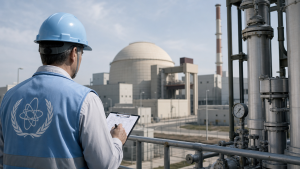
Speaking at a press conference at the Fukushima Daiichi nuclear power plant on Wednesday, Director General of the International Atomic Energy Agency (IAEA) Rafael Mariano Grossi said inspections of Iran's enrichment sites would take place as required under the memorandum of understanding signed by Washington and Tehran.
"I can understand political statements, they are part of the reality, but the fundamental thing is that there has been a Memorandum of Understanding signed by both presidents," Grossi said.
He noted that the agreement explicitly provides for IAEA supervision of Iran's nuclear activities and stressed that inspections are an essential part of the process.
"To do that, we will have to inspect. Whether this happens the day after tomorrow or in one week or in 10 days is important, but not essential. This is going to happen," Grossi said.
However, Iran disputed that interpretation.
Iranian Deputy Foreign Minister Kazem Gharibabadi said any decision on inspections of the enrichment facilities would only be taken as part of a final agreement and after sanctions imposed on Tehran are lifted.
Writing on X, Gharibabadi said such issues "will be reviewed and decided only within the framework of a final agreement" and accused others of attempting to influence negotiations through "media hype."
The differing statements come just a week after the US and Iran signed an interim memorandum that provides a 60-day window for negotiators to resolve outstanding issues before reaching a broader agreement.
The IAEA has been unable to inspect Iran's key enrichment facilities since the 12-day conflict between Israel and Iran in 2025. According to the agency, inspectors have visited other nuclear installations, including the Bushehr nuclear power plant, but have not been granted access to enrichment sites where Iran is believed to possess enough highly enriched uranium that could potentially be used for several nuclear weapons if further enriched.
Iran maintains that its nuclear programme is entirely peaceful, although it remains the only non-nuclear-weapon state enriching uranium to 60 per cent purity.
The proposed inspections are considered central to implementing the interim agreement, which envisages Iran reducing the enrichment level of its uranium stockpile in exchange for the easing of US-backed sanctions on Iranian oil exports.
The diplomatic process has unfolded alongside continued regional tensions.
The ceasefire reached after last week's agreement has already faced strain amid renewed hostilities involving Israel and the Iran-backed Hezbollah group in Lebanon. On Wednesday, Israel carried out an airstrike in southern Lebanon that killed two people, according to Lebanon's state-run news agency, marking Israel's first strike in the country since the latest ceasefire came into effect.
Israeli Defence Minister Israel Katz said the United States had not asked Israel to withdraw its forces from Lebanon, adding that Israeli troops would remain as long as Hezbollah continued to pose a security threat.
Lebanese and Israeli officials are expected to hold talks in Washington this week as part of efforts to negotiate an Israeli withdrawal from southern Lebanon.
Meanwhile, technical-level negotiations between the United States and Iran are expected to resume early next week at the Bürgenstock resort in Switzerland, with Pakistan continuing its role as a mediator.
The diplomatic activity also coincided with US Secretary of State Marco Rubio's visit to the Persian Gulf. Rubio began a three-country tour with meetings in Abu Dhabi, where he held closed-door talks with United Arab Emirates President Mohammed bin Zayed Al Nahyan before travelling to Kuwait.
The US State Department also announced the limited reopening of the US Embassy in Kuwait, which had remained largely closed for more than three months during the Iran-Israel conflict. Rubio attended a ceremonial flag-raising at the embassy and is scheduled to travel to Bahrain later in the tour.