'Influential Person' Behind Sabarimala Women's Entry? New Claims Spark Fresh Debate
The politically sensitive Sabarimala women's entry controversy has resurfaced in Kerala after fresh claims reportedly made by former Travancore Devaswom Board (TDB) president A. Padmakumar came to light on Sunday. The issue relates to the entry of two women of menstruating age into the Sabarimala temple in January 2019, months after the Supreme Court ruled that women of all age groups could enter the shrine. The ruling had triggered widespread protests and political controversy across Kerala....
The politically sensitive Sabarimala women's entry controversy has resurfaced in Kerala after fresh claims reportedly made by former Travancore Devaswom Board (TDB) president A. Padmakumar came to light on Sunday.
The issue relates to the entry of two women of menstruating age into the Sabarimala temple in January 2019, months after the Supreme Court ruled that women of all age groups could enter the shrine. The ruling had triggered widespread protests and political controversy across Kerala.
According to recent media reports, Padmakumar allegedly told some of his close associates that he and senior police officer S. Sreejith were intentionally kept away from Sannidhanam, the temple's main complex, on the day the two women entered the shrine.
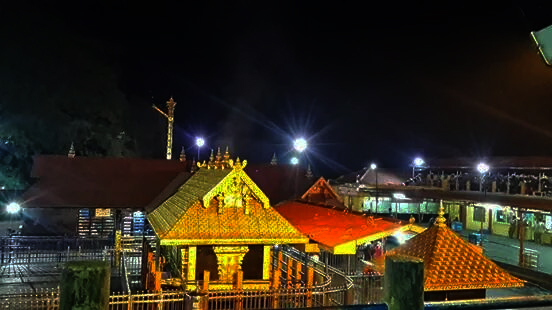
Sabarimala Row Deepens as Former TDB Chief Points to 'Influential Person' (Image Source: Wikimedia Commons)
The reports further claimed that Padmakumar believed the move was planned by a highly influential individual who had significant influence within both the ruling CPI(M) and the Left Democratic Front (LDF) government at the time.
The alleged disclosure has once again brought attention to the circumstances surrounding the women's entry into the temple, which remains one of Kerala's most controversial political and religious issues.
However, the CPI(M) has so far avoided commenting directly on the allegations. Party state secretary M.V. Govindan said any clarification regarding the reported remarks should come from Padmakumar himself.
The party's cautious response suggests it is unwilling to be drawn into a renewed debate over the Sabarimala issue, which had dominated Kerala's political landscape following the Supreme Court verdict.
Neither Padmakumar nor the individuals named in the reports have publicly provided detailed comments on the allegations so far.
He is also reported to have claimed that he had been asked to avoid travelling to Sabarimala on that day and instead proceed to Thiruvananthapuram.
Padmakumar, a former CPI(M) MLA who has distanced himself from the party after being named an accused in the Sabarimala gold loss case and subsequently jailed, is yet to publicly address the media following his release on bail.
The reported revelations surfaced at a time when the CPI(M) leadership indicated that organisational action could be initiated against Padmakumar in connection with the Sabarimala gold loss case.
When the media sought the party's response to the reports, Govindan said the matter should be clarified by Padmakumar himself.
"It is not our responsibility to respond to all these allegations. Those questions should be directed to Padmakumar. After he came out of jail in connection with the Sabarimala gold loss case, he was removed from all party responsibilities," Govindan told reporters.
He further said that any organisational action against Padmakumar would be decided by the CPI(M)'s Pathanamthitta district committee.
"The district committee is the competent authority to take organisational action. They will surely take an appropriate decision," he said.
The Sabarimala women's entry issue remains one of the most contentious political and social controversies in Kerala in recent years.
In September 2018, the Supreme Court, in a landmark judgment, struck down the centuries-old practice that barred women between the ages of 10 and 50 from entering the hill shrine, holding that the restriction violated constitutional guarantees of equality and freedom of worship.
The verdict triggered widespread protests across Kerala, with a section of Ayyappa devotees and Sangh Parivar organisations opposing the implementation of the judgment and accusing the then CPI(M)-led LDF government of "attempting to interfere" with temple traditions.
The controversy intensified in January 2019 when two women of menstruating age entered the Sabarimala temple under police protection, becoming the first to do so after the SC verdict.
The development led to massive protests, political confrontations and legal challenges. The Left government headed by then Chief Minister Pinarayi Vijayan had defended its actions, maintaining that it was duty-bound to implement the Supreme Court's order.
The apex court later referred a batch of petitions raising broader questions on religious practices and gender justice to a larger bench. The issue remains pending before the court.
(With Inputs from news agency PTI)