Indian Rupee Tops Asia: What Drove the Recovery, and Why It Remains Vulnerable
Indian Rupee Tops Asia: The Indian rupee has staged a sharp recovery against the US dollar, moving from one of Asia's worst-performing currencies to its strongest.
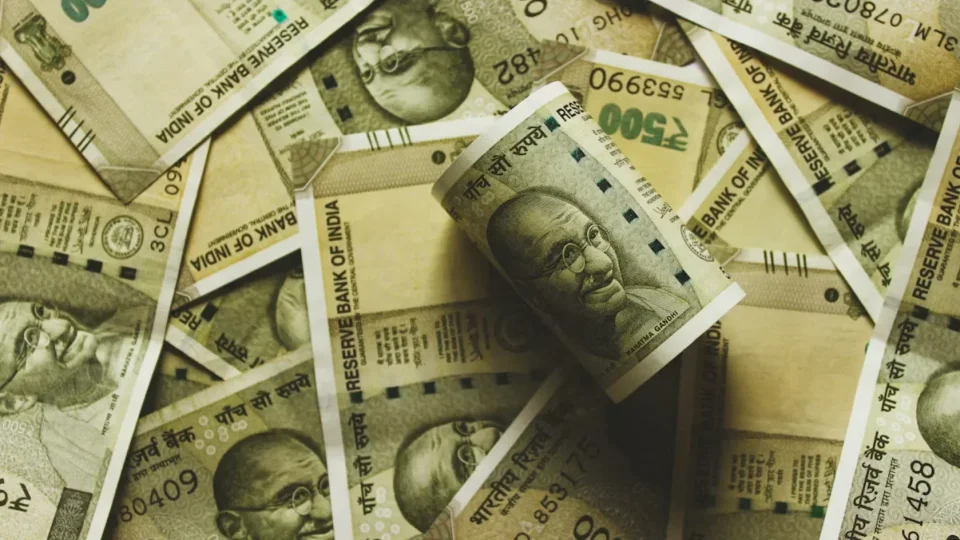
Indian Rupee Tops Asia: The Indian rupee has staged a sharp recovery over the past six weeks, rising to an eight-month high of 92.18 against the US dollar during intraday trading on Wednesday. The turnaround has been driven largely by the Reserve Bank of India's (RBI) intervention in the foreign exchange market, measures to discourage speculative bets against the rupee and a record return of foreign investors to Indian equities.
According to The Indian Express, the rupee closed at 92.24 against the dollar on Wednesday, appreciating by as much as 0.6% during the day. The recovery marks a significant reversal for a currency that had been among Asia's worst-performing currencies earlier in 2026 but has now emerged as its best-performing currency over the recent period. The rupee had come close to the 97-per-dollar mark in May and weakened in six of the first nine months of the year. Its recovery gathered pace after the RBI announced a series of extraordinary measures on October 10 to make speculative bets against the Indian currency more expensive.
Also Read: GST Gets An Automated Exit Route, but Compliance Remains the Price
The measures appear to have helped change market sentiment. After gaining 1.1% in October, the rupee has appreciated by nearly 3% in November. Foreign investors have also returned to the domestic stock market, purchasing Indian equities worth $15 billion so far this month, the highest monthly inflow on record, according to The Indian Express. This has coincided with weaker global investor interest in artificial intelligence-related investments.
From One of Asia's Weakest to its Strongest Currencies
The scale of the recovery becomes clearer when viewed against the rupee's performance earlier in the year. Despite the sharp depreciation in the first nine months, the currency is now down only 2.6% in 2026. As recently as October 9, it had fallen by more than 7% for the year. However, the recovery does not necessarily mean that the rupee has regained its underlying strength.
Dhiraj Nim, Senior Economist at ANZ, told the newspaper that the current exchange rate may not reflect the rupee's actual market value because it remains heavily influenced by policy intervention. One important intervention involves the RBI supplying dollars directly to oil marketing companies (OMCs). These companies need substantial amounts of US dollars to purchase crude oil from international markets. By supplying them with around $500 million a day, the RBI reduces their need to buy dollars in the open market, easing pressure on the rupee.
The arrangement is significant because India depends heavily on imported crude oil. When oil companies purchase dollars to pay for imports, demand for the US currency rises, often putting pressure on the rupee. By meeting part of this demand directly, the RBI can help contain that pressure. Nim said the RBI's immediate priorities could require further appreciation of the rupee. He identified the 90-91 range against the dollar as a level of strong near-term support for the USD/INR currency pair.
Also Read: Congress-Meta Face-Off Puts Political Content Moderation Under Scrutiny
Economists at ICICI Securities Primary Dealership, led by Abhishek Upadhyay, have also argued that the RBI should not prevent further appreciation if the earlier weakness was driven largely by speculative pressure rather than the rupee's underlying economic fundamentals.
Why the RBI Made Betting Against the Rupee Expensive
A key part of the RBI's October 10 measures was the introduction of the Foreign Exchange Risk Reserve (FERR). Under this arrangement, banks must set aside 20% of the value of certain foreign exchange derivative contracts exceeding $2 million that involve the rupee. The amount is held in cash with the RBI.
Foreign exchange derivatives allow businesses and investors to manage the risk of currency movements. For example, an Indian importer expecting to pay a supplier in dollars can enter into a contract to protect itself against the possibility that the dollar becomes more expensive before the payment is due. This process is known as hedging. However, such contracts can also be used by traders to speculate on currency movements and profit from a weakening rupee.
By requiring banks to set aside additional funds for these transactions, the RBI has increased the cost of taking positions against the Indian currency. This makes speculative bets more expensive and can reduce pressure on the rupee. The measure has raised questions about whether legitimate businesses could also face higher costs when protecting themselves against exchange rate fluctuations. However, the RBI's intervention was primarily aimed at curbing speculative activity rather than preventing genuine businesses from managing currency risks.
The restrictions may also remain in place for some time. Economists at ICICI Securities Primary Dealership believe that the rupee's underlying economic fundamentals need to improve substantially before most of the regulatory restrictions introduced in October can be withdrawn.
Why the Recovery May Not Last
Despite the recent appreciation, economists remain cautious about the rupee's outlook. One reason is the difference between foreign portfolio investment (FPI) and foreign direct investment (FDI). While foreign investors have returned to Indian equities in substantial numbers, the country's FDI figures continue to raise concerns.
Net FDI recorded an outflow of $4.9 billion in September, according to RBI data released on Wednesday. This means that more foreign direct investment flowed out of India than came into the country during the month. The outflow came after India recorded combined net FDI inflows of $11 billion in July and August. It was also the weakest monthly performance since at least 2011, according to The Indian Express.
The distinction between the two forms of investment is important. Foreign portfolio investors generally purchase shares and other financial assets and can move their money relatively quickly in response to market conditions. Foreign direct investment, on the other hand, involves longer-term investments in businesses, production facilities and other commercial activities. A surge in foreign purchases of Indian shares can support the rupee by increasing the supply of dollars in the domestic foreign exchange market. However, this does not necessarily indicate a similar improvement in long-term foreign investment in the Indian economy.
There are also external risks. India's dependence on imported crude oil makes the rupee vulnerable to a rise in international oil prices, which increases the country's demand for dollars. Similarly, if global investors become less willing to take risks and withdraw money from emerging markets, foreign investment inflows into India could weaken. The Bank of America's Asia Fund Manager Survey for November identified a lack of exposure to artificial intelligence-related investments and a depreciating currency among the three leading concerns for investors in the Indian market. This was despite investors turning net overweight on Indian equities for the first time since January.
Nim of ANZ said global investors, who had previously maintained lower-than-usual exposure to Indian equities, could continue rebuilding their positions gradually. He added that strong real GDP growth and corporate earnings could support Indian markets, although a sharp global market sell-off could reduce foreign investment if investors become more cautious.