Wall Street’s AI Rebound: Relief Rally or a Pause in the Sell-Off?
US stock futures recovered on Monday after a sharp technology-led sell-off, but concerns over AI valuations and the returns on heavy investments in the sector continued to weigh on investor sentiment.
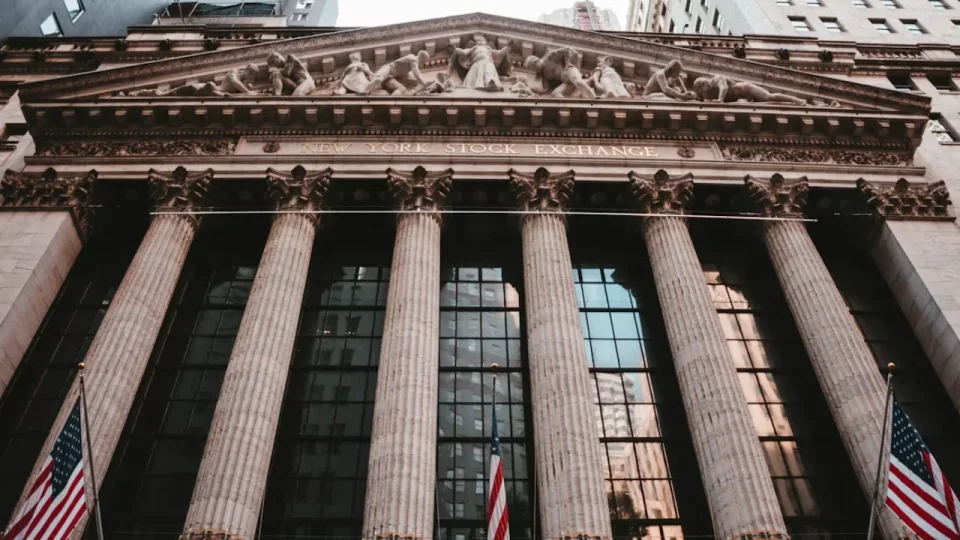
Wall Street AI Stock Market Rebound: US stock futures showed a strong recovery on Monday, providing some relief to the respective sector that suffered a week of heavy losses in technology shares. It is difficult to say at the moment whether the rebound is brief or will last longer, but it definitely begs one question: Will it generate enough returns to justify the valuations of the companies driving the AI boom.
According to Yahoo Finance’s market update published at 4:11 am Eastern Time (2:41 pm IST), S&P 500 futures rose 2.6%, Dow Jones Industrial Average futures gained 1.9%, while Nasdaq-100 futures advanced 3%. The figures reflected trading before the opening of the US stock market and did not represent the performance of the indices during the regular session.
Nvidia, which is currently one of the world’s most valuable companies and the leading supplier of AI chips, also saw its shares rising approximately by 8% in pre-market trading, the Yahoo Finance suggested. The technology-heavy Nasdaq-100 recorded the strongest futures rebound among the three major benchmarks. The rebound of shares of AI giants in controversy suggest that investors were returning to bargain-hunting after the recent sell-off.
Also Read: COP31: Climate Change Negotiations and the Collapse of Common but Differentiated Responsibility
Before the recovery on Monday, the Wall Street saw a tough week, with the S&P 500 had fallen for seven consecutive sessions. Meanwhile, technology stocks faced renewed selling pressure. The decline pushed the S&P 500 and Dow into correction territory, according to Yahoo Finance.
Why Investors are Questioning the AI Boom
The passing week, and the sell-off revealed a growing divide between investor's enthusiasm for artificial intelligence and their concerns about the financial returns. Major technology companies have committed substantial sums to data centres, advanced chips and computing infrastructure to develop and deploy AI systems. While demand for these services remains significant, investors are increasingly scrutinising whether the revenue generated will be sufficient to justify the scale of spending.
The concern is not only chipmakers. Companies conceiving AI infrastructure and nurturing it have also faced pressure, as investors reassess the cost of expansion, reliance on borrowing and the time required to turn investment into profits.
Also Read: China Says It Is Ready to Ease Business Visa Process With India Amid Reports of Fewer Visas
This has made the market more sensitive to corporate guidance and evidence of actual demand. Strong earnings alone may not be enough to sustain valuations if companies cannot demonstrate that their AI investments are producing proportionate returns.
Nvidia Remains at The Centre of The Volatility
Nvidia, a key supplier of processors used to train and run AI systems, has been among the companies caught in the sell-off. Its shares fell sharply in the preceding week before rebounding in Monday’s pre-market session. The company’s performance has become an important indicator of investor confidence in the wider AI trade. Its fortunes are closely tied to the spending plans of major technology companies and the continued demand for advanced chips.
Regulatory and geopolitical concerns have added another layer of uncertainty. Yahoo Finance reported that US Treasury Secretary Scott Bessent was seeking answers from Nvidia over its semiconductor sales to China. Restrictions on advanced chip exports could affect the company's access to an important market and complicate the outlook for the semiconductor industry.
A Rebound Does Not Settle the Question
The rise in futures suggests that some investors were willing to buy shares after the recent losses. But it does not, by itself, establish that the sell-off has ended. Yahoo Finance noted that the CBOE Volatility Index, commonly known as the VIX, remained at its highest level since the US tariff announcement in April 2025. The elevated reading pointed to continued nervousness in the market despite Monday’s recovery.
Investors were also looking ahead to economic data and corporate earnings during a holiday-shortened US trading week. Reports from companies such as Hewlett Packard Enterprise and Zoom Communications were among the events on the calendar.
For markets, the central question remains whether the AI sector can convert its investment boom into sustainable earnings. Monday’s recovery offered a reprieve after a bruising week, but investors are likely to look for stronger evidence of returns before treating it as the start of a lasting recovery. -- keep it as is, gaps and all; just fill the xxx