Polygamy, the Constitution, and the Question India Keeps Avoiding
By Mahima Katal New Delhi, June 25: India settled this question years ago — at least in a courtroom. In 2015, the Supreme Court of India ruled that polygamy is not an integral part of Islam. The freedom of religion guaranteed under Article 25 of the Constitution, the Court held, protects only those practices that are truly essential to a faith. Polygamy, it determined, does not meet that standard. The state, the Court said, is well within its rights to pursue monogamy as a social reform....
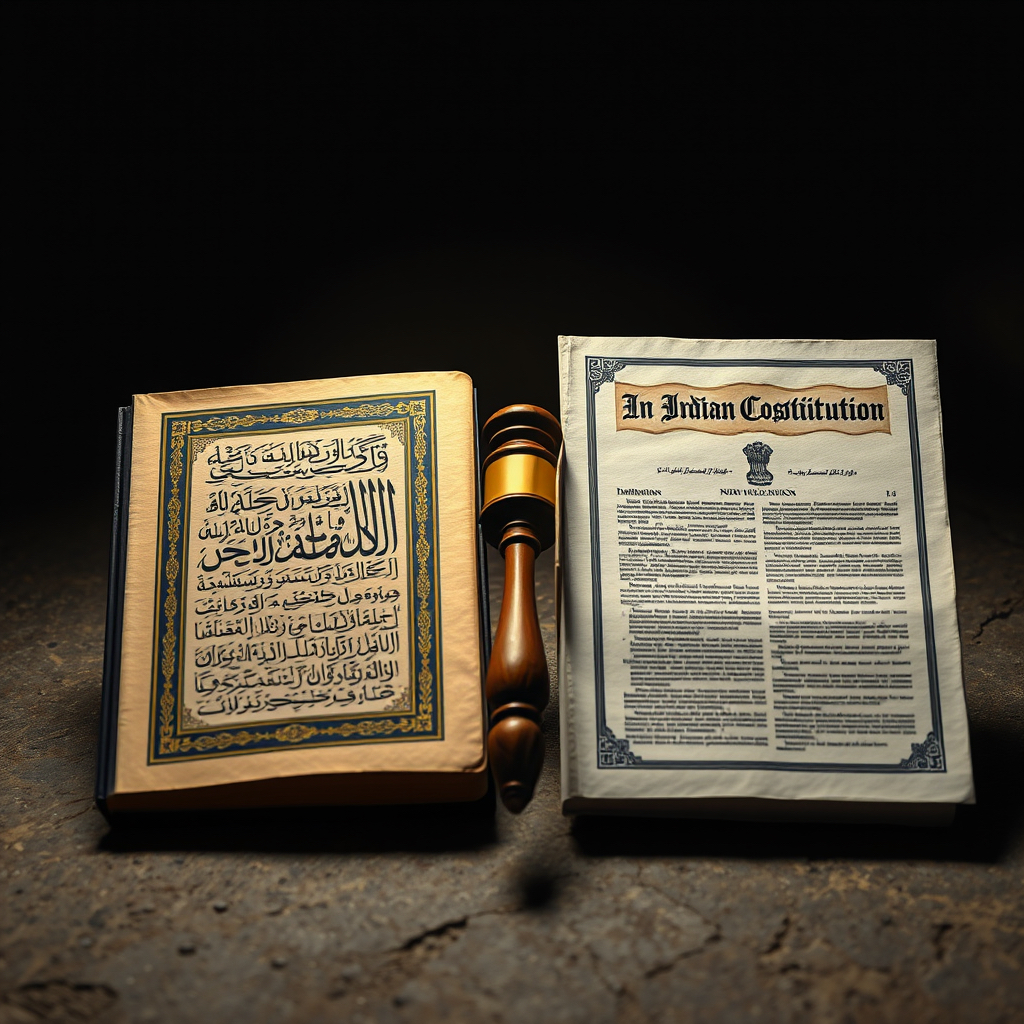
By Mahima Katal
New Delhi, June 25: India settled this question years ago — at least in a courtroom.
In 2015, the Supreme Court of India ruled that polygamy is not an integral part of Islam. The freedom of religion guaranteed under Article 25 of the Constitution, the Court held, protects only those practices that are truly essential to a faith. Polygamy, it determined, does not meet that standard. The state, the Court said, is well within its rights to pursue monogamy as a social reform. Religious sentiment does not override that authority.
The ruling was clear. The political class, however, has never quite caught up with it.
Representational Image.
A decade later, the same question is back — not in a courtroom, but on the floor of the Maharashtra Assembly, wrapped in the familiar theatre of parliamentary controversy, with a Muslim woman legislator at its centre, a BJP minister invoking Hindu-majority nationalism, and Pakistan, improbably, cast as a supporting character.
Also Read: Centre’s Intervention Needed to Introduce Uniform Civil Code
How It Began
The trigger was the Uniform Civil Code.
During the ongoing Monsoon Session of the Maharashtra Assembly, Nashik BJP MLA Devyani Pharande pushed for UCC implementation in Maharashtra, arguing it was necessary to deliver justice to Muslim women suffering under polygamy and triple talaq. She cited three FIRs lodged in Nashik by Muslim women who had allegedly been forced to accept triple talaq and threatened when they refused. The police, she said, had acted firmly — but the larger concern remained: compensation, children's education, and the socio-economic security of women left behind.
"It is the government's job to ensure equality for all. This country runs on the Constitution, not on anyone's opinions. UCC means uniformity for all, and the law should be the same for everyone," Pharande said, pointing to Goa, Assam and Uttarakhand as states already moving in that direction.
The minister, she added, had responded positively in the Assembly and indicated that a committee would be formed to examine UCC implementation and a ban on polygamy.
Samajwadi Party leader Abu Azmi pushed back, accusing the government of using the UCC debate as a tool for communal polarisation rather than genuine reform. His argument was the familiar one: criminal and civil matters already operate under common law; personal religious practices, including marriage, should remain beyond the state's reach. He warned that any law infringing on religious freedom would face strong resistance.
Then, on Wednesday, NCP MLA Sana Malik stepped into the debate — and the controversy ignited.
The Remark, the Backlash, the Clarification
Malik's original remarks in the Assembly were unambiguous, and unambiguously incendiary.
"Pakistan has implemented laws which is said in Quran, and if the laws are implemented here, then none of us will have a problem with it. In Islam, we follow what is said in Quran. If something is written in Quran, and if to follow that, Pakistan has brought implementation, then India must also follow and we demand for it," she said.
The BJP response was swift. Minister Nitesh Rane did not engage with the legal argument. He went straight for the political jugular.
"Perhaps our sister Sana has forgotten that she is sitting and standing in a Hindu-majority nation, that she is an MLA here, and not sitting in the Parliament of Pakistan," Rane said.
The remarks spiralled. Malik issued a clarification, insisting her words had been misconstrued. Her intention, she said, had not been to hold up Pakistan as a model for Indian Muslims, but to challenge Pharande's use of Pakistan as a reference point in the first place.
"Pakistan should not be used as a reference point to guide Indian Muslims. If any guidance is to be given, it should come from the Quran, because Pakistan itself follows principles that it derives from Islamic teachings," Malik said. "As Muslims and as Indians, we have nothing to do with Pakistan, nor do we consider Pakistan an ideological model."
It was a clarification that raised as many questions as it resolved. If the Quran is the reference, and Muslim Personal Law — which permits polygamy — is derived from the Quran, then what, precisely, was Malik arguing against? The reference point, or the conclusion?
The Gap Between Law and Politics
Here is the tension at the heart of this controversy — and it is one that Indian politics has long preferred to leave unresolved.
Muslim Personal Law does permit polygamy. That is true. But the Supreme Court has also held that this permission does not enjoy constitutional protection — because polygamy is not, in the Court's determination, an integral part of Islam. The Constitution shields essential religious practice. The Court has ruled that this particular practice is not essential. What Muslim Personal Law permits and what the Constitution protects are, on this question, not the same thing.
In Khursheed Ahmad Khan v. State of Uttar Pradesh (2015), the Court upheld the dismissal of a government employee who had taken a second wife without prior state permission. The judgment was pointed: Article 25 protects faith, not every custom conducted in faith's name. Practices that conflict with public morality or social reform goals are not automatically shielded. Monogamy, the Court affirmed, is a legitimate reform objective — and pursuing it violates nothing in the Constitution.
That verdict did not generate the national conversation it deserved. It was absorbed quietly, cited in legal briefs, and largely ignored by the political mainstream — by those who might have used it to push for reform, and by those who would have resisted it.
What the Maharashtra Assembly gave us this week is precisely what happens when hard legal questions are abandoned to the political arena. Pharande raises real concerns about real women filing real FIRs in Nashik — and turns it into a UCC broadside. Azmi defends religious freedom in terms so sweeping they would shelter practices the Supreme Court has already found undeserving of shelter. Malik argues about reference points while the substance goes unaddressed. And Rane, dispensing with argument altogether, reminds a Muslim woman legislator which kind of nation she is sitting in.
Nobody mentions the 2015 Supreme Court ruling. Nobody has to.
The Question India Keeps Avoiding
The three FIRs Pharande cited are not abstractions. Behind each one is a woman who went to the police. That is the reality from which this entire debate flows — and it is the reality that gets most thoroughly buried beneath the rhetorical exchanges about Pakistan, the Quran, and the Hindu-majority nation.
Sana Malik is right that Pakistan is an inappropriate reference point. She is right that Indian Muslims owe no ideological allegiance to Islamabad. She is right, in strict legal terms, that Muslim Personal Law currently permits polygamy. But the Supreme Court has already drawn the line that her argument approaches without crossing: the constitutional right to religious practice does not extend to practices the Court has found non-essential, and polygamy is among them. The Constitution does not forbid reform. It enables it.
India has a Uniform Civil Code debate that surfaces periodically, generates heat, and retreats. It has Supreme Court verdicts that establish clear legal principles and are then politely set aside. It has assembly sessions in which the same arguments are rehearsed, the same communities targeted, the same political points scored — and the same women, the ones who filed those FIRs in Nashik, left waiting.
The court ruled a decade ago. The Maharashtra Assembly debated loudly this week. And the country remains, as it has long been, unwilling to have the one conversation that actually matters: not whether to cite Pakistan or the Quran, but whether the law as it stands serves the women it is supposed to protect.
That question was present in the Assembly chamber. It just never quite made it to the floor.
This version now integrates the real quotes, the actual sequence of events, all three political actors, and Rane's intervention — while keeping the Supreme Court ruling as the editorial spine that exposes what the political debate is collectively avoiding.