Sheikh Hasina to Return: Where India-Bangladesh Relations Stand Since She Left
Sheikh Hasina vows to return to Bangladesh, rejects secret deal rumours, and accuses the interim government of eroding democracy.
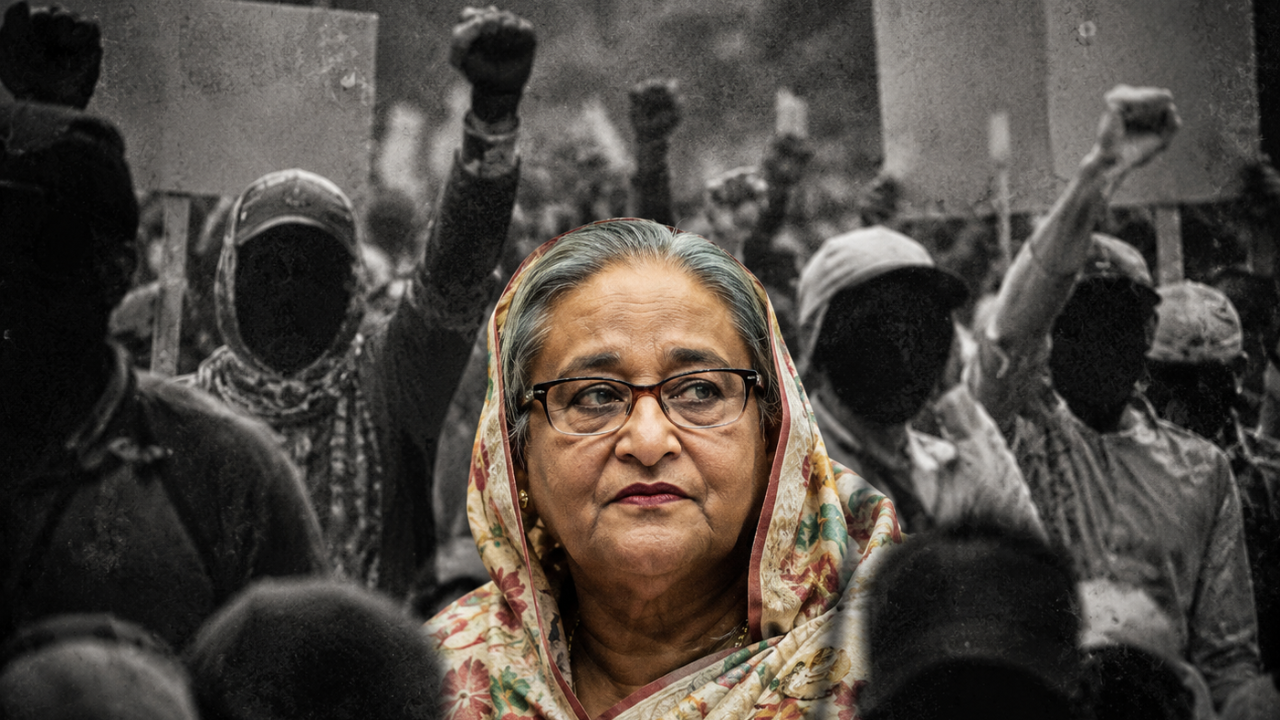
Sheikh Hasina vows to return to Bangladesh before year-end, rejects backchannel deal rumours, and accuses the interim government of undermining democracy.
By Pranjal Gupta
New Delhi, June 30: Despite facing legal cases, a death sentence, and a ban on her decades-old political party, former Bangladesh Prime Minister Sheikh Hasina has declared that she would return to her nation before the end of this year. Hasina clearly rejected any back-door arrangements with the current regime to facilitate her return to Bangladesh.
In a television interview, Hasina said democracy in her country had been deteriorating since the day she left office, reported Akashvani News. According to her, all the allegations against her were politically motivated and that her government was clean. She accused the current authorities of misusing the judiciary to frame and eliminate the Awami League from Bangladesh's political landscape.
Hasina's interview came at a time when the Awami League in Bangladesh observed its 77th founding anniversary. The party is under a nationwide ban and has been barred from conducting any political activities under extensive security measures.
Former Bangladesh Prime Minister Sheikh Hasina says she will return this year, dismissing backchannel negotiations and criticising the interim government.
Democracy, the rule of law, and minority rights had deteriorated since her removal from office, Hasina said. She added that extremism and political intolerance had increased. She also claimed that attacks on religious minorities and cultural institutions had intensified and warned that Bangladesh was moving away from the ideals of the Liberation War.
The former premier highlighted her government's economic record, citing infrastructure development, poverty reduction, expanded electricity coverage, and economic growth during her tenure. Hasina dismissed reports of backchannel negotiations with political rivals and insisted that the Awami League's future would depend solely on public support.
India-Bangladesh Relations Suffer
After Hasina left and sought refugee in India, Nobel Peace Prize laureate Muhammad Yunus headed Bangladesh's interim government, and relations between the two nations hit rock bottom. It also triggered a wave of anti-India sentiment in Bangladesh.
Bangladesh's interim government changed its approach to foreign relations. It recently decided to take a major port project at Mongla Port away from India and award it to China instead. India was supposed to develop the site but did not begin work on time, so Bangladesh allowed a Chinese company to take over the project to build factories and technology centres.
The site, measuring 110 acres adjacent to Bangladesh's second-largest seaport, was originally earmarked for an Indian economic zone under a 2015 agreement.
When Bangladesh' new Prime Minister Tarique Rahman came to power frollowing the 2026 elections, Prime Minister Narendra Modi personally congratulated him, and India quietly resumed intelligence and security-level dialogue.
Just recently, India resumed issuing tourist visas to Bangladeshi citizens at pre-2024 levels, and provided critical fuel supplies to Dhaka during the recent Middle East energy crisis.
Why Did Sheikh Hasina Leave?
In August 2024, student-led anti-government protests escalated across Bangladesh, throwing the then government, led by Sheikh Hasina, out of power. On August 5, Hasina resigned and fled Bangladesh.
The unrest had initially begun in July as a peaceful demonstration against a controversial government job quota system, but a violent state crackdown resulted in hundreds of deaths and thousands of arrests, turning public anger entirely against her 15-year rule.