The Strait Blinks: How India Is Threading the Hormuz Needle
The Slate Bureau New Delhi: Green Sanvi, an Indian-flagged LPG carrier bearing 46,650 tonnes of cooking gas and 25 seafarers, cleared the Strait of Hormuz on Saturday, becoming the seventh Indian vessel to thread through a strait that, for weeks, has been less a shipping lane than a geopolitical wound. Back home, the cargo represents roughly half a day's worth of the fuel that lights stoves from Kerala to Kashmir. The Strait of Hormuz has been effectively closed to normal commerce since...
The Slate Bureau
New Delhi: Green Sanvi, an Indian-flagged LPG carrier bearing 46,650 tonnes of cooking gas and 25 seafarers, cleared the Strait of Hormuz on Saturday, becoming the seventh Indian vessel to thread through a strait that, for weeks, has been less a shipping lane than a geopolitical wound. Back home, the cargo represents roughly half a day's worth of the fuel that lights stoves from Kerala to Kashmir.
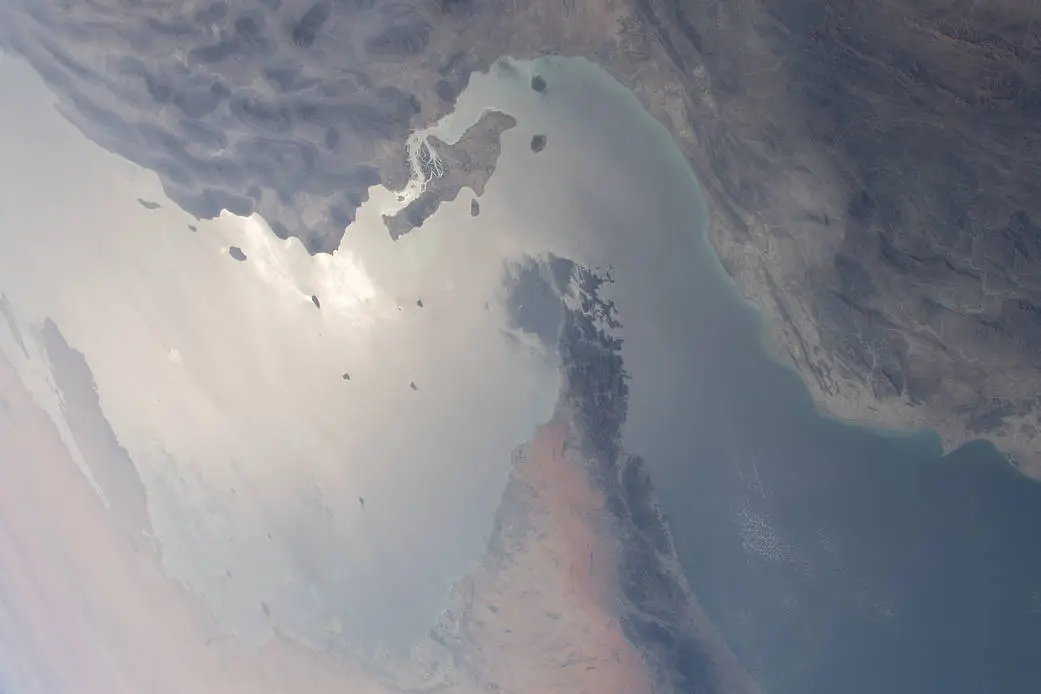
The Strait of Hormuz has been effectively closed to normal commerce since February 28, when the United States and Israel launched strikes on Iran and Tehran answered with sweeping retaliation. The narrow channel — through which Gulf oil and gas historically flowed to the world like blood through an artery — seized up almost overnight. Iran has since indicated that "non-hostile vessels" may pass after coordinating with Iranian authorities, a diplomatic formulation that has allowed a careful, ship-by-ship negotiation with normalcy.
Seven LPG tankers have now made it through from the west. Before Green Sanvi, there were Pine Gas and Jag Vasant (92,612 tonnes, arriving between March 26–28); MT Shivalik and MT Nanda Devi (92,712 tonnes, docking at Mundra and Kandla on March 16–17); and this week, BW TYR and BW ELM, together carrying roughly 94,000 tonnes — BW TYR reaching Mumbai on March 31, BW ELM berthing at New Mangalore the following day. The oil tanker Jag Laadki added 80,886 tonnes of UAE crude at Mundra on March 18. Jag Prakash, carrying Omani
gasoline bound for Africa, has since crossed and is en route to Tanzania.
Seventeen Indian-flagged vessels, with approximately 460 seafarers aboard, remain stranded on the western side of the strait.
Simultaneously and in some ways more significantly a cargo that would have been unthinkable just months ago quietly docked at Mangalore.
The vessel Sea Bird arrived on April 2 carrying around 44,000 tonnes of Iranian LPG and began offloading. According to India's Ministry of Petroleum and Natural Gas, this is likely the first purchase of Iranian energy in seven years, made possible after Washington temporarily waived sanctions on Iranian oil and refined products last month in an effort to cool prices that have spiked sharply since the conflict began.
The stakes for India are not abstract. The country consumed 33.15 million tonnes of LPG last year. Imports cover roughly 60 percent of that demand — and nine-tenths of those imports originate in the Middle East. When the strait closed, India found itself staring at the worst cooking gas shortage it has faced in decades, the kind of shortage felt not in boardrooms but in kitchens.
Originally, 28 Indian-flagged vessels were caught in the strait when the conflict erupted — 24 on the western side, four on the eastern. Of those, nine have now reached safety. Two LPG carriers, Jag Vikram and Green Asha, remain in the western strait. One empty vessel is currently being loaded.
On shore, the machinery of crisis management grinds on. The Directorate General of Shipping's round-the-clock control room has fielded more than 5,000 calls and 10,000 emails since activation — 31 calls and 129 emails in the past 24 hours alone. Authorities have facilitated the repatriation of over 1,320 Indian seafarers, including 190 in a single day. Port operations across India remain unimpeded, with no congestion reported at major terminals.
The Ministry of Ports, Shipping and Waterways says all Indian seafarers in the Gulf region are safe.
(With inputs from PTI)